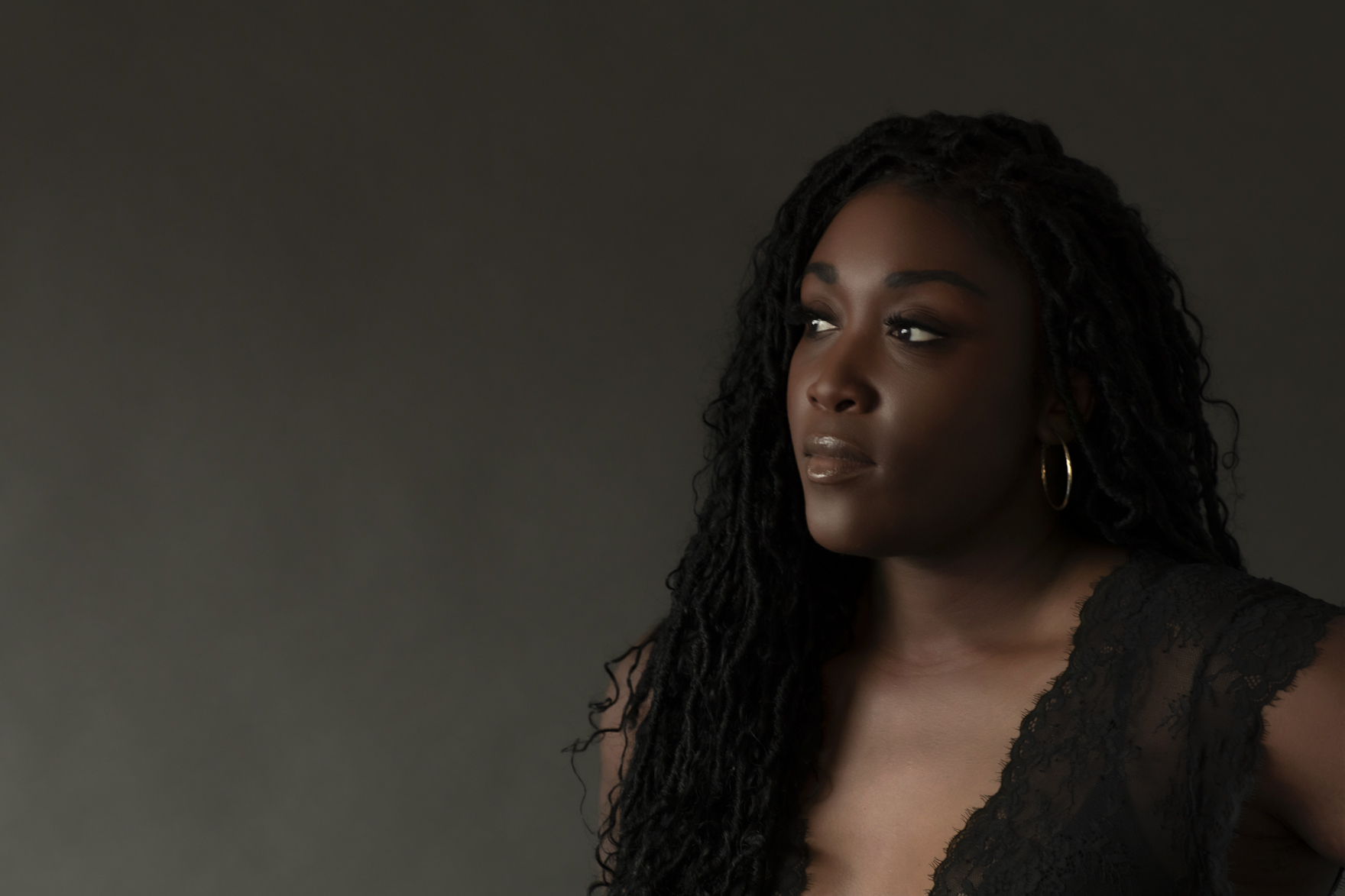
Actress Malynda Hale was always destined to be a performer. From the first time she was mesmerized by Whitney Houston singing the national anthem at the Super Bowl in 1991, Hale knew her she didn’t want to do anything else but perform.
Her new drama Bull Street, which is available to stream, brought on a new challenge: her first main role in a film. Inspired by writer-director Lynn Dow’s own family history, Bull Street follows the attorney LouEster Gibbs (Hale) as she contends with legacy and privilege in the courtroom when the ownership of her family’s land is challenged.
From musical theater performances, to her activism on social media, directing her own short films, to now a starring role in Bull Street, Hale’s journey has always been about the building of her creative community, no matter what challenge lies ahead.
Culture Flux: So just as some background, you performed a lot as a child in theater and in choir. Do you feel like those creative paths always seemed like a natural outlet for you, even at that young age?
Malynda Hale: I do. I grew up singing in church and being exposed to music was always a part of my life. My dad was a musician.
And what really kind of set me on this path was seeing Whitney Houston sing the national anthem for the Super Bowl in 1991. I was five years old and I knew that that’s something that I wanted to do eventually in my life. So I sang in church, I did musical theater, ended up going to college for music and theater.
It’s always been a huge part of my life because I’ve just always loved the way that it made me feel and the community that I was a part of when it came to the arts and the people that I met. And yeah, I’ve never really envisioned myself doing anything else.
Is part of that appeal, that community aspect of it as well, because you tend to work in groups and those kinds of scenarios with like performing as a choir and musical theater, anything like that?
Absolutely! I think that that’s one of the biggest things that the arts brings is the sense of community. It’s finding your people, finding people that see the world the same way that you do or love the same things that you do.
And I think that that’s been the beautiful thing of music and theater and film is that you find, we would call them the theater geeks in high school, but they were your community! That was who you loved. That was who you spent time with.
It’s really nice to be able to find just like-minded people that love the same things and view the arts in the same way. It gives them that same level of confidence and an understanding.
I think that the arts are a really great way to learn about other people, learn about different cultures, learn about different walks of life and expose you to different ways of thinking. So yeah, I think community is a huge part of it.
You mentioned the Whitney Houston performance. What other kind of performances, whether it was theater and drama, movies, music, really inspired you and made you want to join that community?
So Whitney Houston was definitely the starting point for me. But growing up, all of those 90s television shows- seeing Brandy and Moesha, and also seeing her play Cinderella, the Roger and Hammerstein [movie] that was on Disney Channel, watching Sister Sister with Tia and Tamara, or watching Salute Your Shorts, which is very much like sketch comedy almost.
But there was such a variety of TV shows and films that I would watch and just, I felt seen, so to speak. And I actually felt like I had a lot of representation growing up. And that’s what made me want to be on screen as well.
So I think that just seeing a wide variety of TV and film, but also when we went into theater, seeing Audra McDonald and Heather Headley, those were, and they still are huge influences on my performance trajectory, but they played a huge part in me wanting to be a part of this community.
So representation was clearly something that really helped you along your path to where you are now.
Absolutely. I think it was so helpful to see people that looked like me doing the thing that I wanted to do, knowing that it was possible. I’ve never felt that it wasn’t possible for me.
I did feel like it’s a little bit harder. And as I’ve gotten into this industry more, it has been a little bit more difficult, but I’ve never thought that it was impossible. And I’m really grateful for those voices and for those performers that kind of paved the way.
And even getting into more serious film, seeing Viola Davis, seeing the Cicely Tysons of the world and Lynn Whitfield and watching how their presence in the industry has grown and evolved. It’s really been inspiring. I hope that as my career continues to grow, that I can be that representation for someone else.

Since you were a singer and a songwriter before you started delving into film, how did your involvement as a musician and performing live prepare you, both as an actor and a filmmaker?
I love this question. I think that when I was writing songs, I was really focused on telling the story of whatever the emotion of that song was, and I think being able to translate that for film and TV has been really, really useful to know what emotion are you trying to convey. What is the audience for this particular piece that you’re working on? How do you want people to feel after they watch this?
I think it’s easy when you’re writing a song and you have lyrics or specific music, there’s a lot that goes with a song as well. But in the same way, a lot goes with a film piece or a TV piece or whatever you’re working on that requires acting and music and good direction and the lighting.
Everything kind of comes together. So being a storyteller with a songwriter has really helped me be a strong storyteller when it comes to TV and film as well.
Was it kind of jarring going from something where you get immediate feedback, like theater or singing live, to then film and television where it could be a year until people get to see that project? Is it hard to transition into that?
Yes, because I’m a very impatient person [laughs]. And so that instant gratification of performing live, I mean, I toured for a very long time. I opened for O-Town and I opened for Smokey Robinson. I opened for Tyrone Wells.
Being able to perform live in that way… I will say also that it’s just one and done, right? You don’t get to go back and do different takes or change it or even like criticize what you’ve done because it’s living forever the way that a film piece is.
So that I actually kind of liked because you just have to put it all out on the table, on the stage, and then it’s done. But with the TV and film, you have to wait until one, it’s edited, and then you have to hope that the edit is the way that you want it to present, you know, the performance that you gave because you do so many different takes. And at the end of the day, you don’t really know what the director is gonna end up choosing, right?
So it is hard. That was a very hard transition for sure. But I do love it because the fact that you do get to do different takes, you get to explore different options.
And I think that that’s really fun because there have been times when I’ve thought about live performances, like, “ah, I wish I had sung it that way.” Or I wish I had, you know, said this line on stage if I was doing a musical or a play, I wish I had said it this way that one time, but you get the option to play when you’re doing TV and film and try different options. Whether that ends up on the cutting room or, you know, ends up in the final cut, I don’t know, but it’s nice to be able to try those options because that has helped me even more as an actor.
Can you talk about that experience of not only becoming an actor, but then delving into filmmaking because you’ve directed a couple of short films now. So what did that experience give you creatively that maybe you didn’t find with just acting?
I mean, I always respected directors, but it definitely gave me more respect for them, realizing how much they’re really guiding the ship and everybody looks to them for what is happening. I mean, even from like the smallest things to the biggest things, making a film, it’s very… what is the word I’m looking for? There’s just a lot of elements to it that I think people don’t realize.
And so those are all really guided by the director. And I found it, I’ve actually found it really, really fulfilling being on the opposite side of the camera because I love being able to bring a vision to life in the way that I’ve wanted it and the actors that I’ve been able to work with, they’ve all been really close friends that are really talented and have really great credits. But because we have that great relationship, it was fun to play with them in that sense and being able to create in that way.
So I think that my respect for directors has grown so much being on this side and knowing what they have to deal with and how they have to really learn to properly communicate with everybody to get the final product that they want. It’s really a lot to it. And I think that people don’t realize how much goes into directing, yeah.
Yeah, I directed one short film and wrote it and I was like, “oh my gosh, there’s so much to think about at once.”
It is! And then if you’re acting in it as well, that’s another element that’s been what was hard for me to do as well. So yeah, so much respect for that.
Absolutely. So you’re involved in a lot of social and political issues as well. Did your interest in the arts and activism start concurrently or was there one particular that really stood out to you first?
In terms of when I got involved in activism? Yeah, I mean, I would say 2016 was really a huge moment for me just how our political landscape changed with the administration and then Black Lives Matter really had an uptick in conversation. And so I didn’t really seek out being a political commentator or talking about cultural commentary on social media. It just kind of happened.
I was just expressing my feelings and my views and it just took hold. And a lot of people started coming to me and wondering what my perspective was in certain things. And so I started sharing them.
I think being an artist that does speak out and is an activist and an advocate has been actually not to my detriment. I think it’s been to my benefit because I want people to know right off the gate what I stand for, what I believe in and who they’re gonna get when they work with me in any capacity, whether it’s as a director or as an actor, knowing that I value every human life and I value diversity and I value all of the things that I think make, that are supposed to make, this country great.
I am very vocal about those things and it does show up in the art that I do, even from the crews that I’ve had on the short films that I’ve directed. They’ve been very diverse, very women-led, very BIPOC-led. It’s been very, very important to me.
So I think they all go hand in hand because I want to make sure that whatever I talk about, I also bring about and I think that that’s really important.
Do you think that films like Bull Street that are tackling important themes can also be a form of activism as well?
I love that question. I do think so. I do because, you know, we’re dealing with a lot of history being erased at the moment and we’re dealing with a lot of legacies being erased.
And I think that this movie, because it talks about both of those things, I think it can be kind of a silent, I don’t want to say silent protest, but it can be a little way to get people to think about some of the things that are happening in the world right now and this country specifically. And so I think it’s coming out at a very timely time and I think it’s important. I think those messages people will take away from the film once they see it, yeah.

If people really enjoyed this film, are there any others that you would recommend to other people? Whether it’s, it could be politically inclined or not, but something that you think would interest people.
Well, it’s so funny because so, it’s not as dark as this film, but when we were filming it, there were moments that reminded me of this film and it’s an old film and I think people should rewatch it with this current cultural lens, but A Time to Killwith Matthew McConaughey and Samuel L. Jackson. I rewatched it when we were filming Bull Street and I was like, “oh my gosh, it’s still so relevant.”
I think there’s actually a lot of films like that that are even more relevant today than when they were made that people could go back and watch. But that’s the first one that comes to mind that I think of because of the message, because of how the justice system was working at the time, a lot of the race relations.
I just think it’s such an important film for people to rewatch.
It’s interesting too, hearing about this film because living in the South my whole life. You see the kind of repercussions of [the past] still happening today. So was there any research that you did for Bull Street considering this is a real place? It’s not all completely fiction.
Yeah, well, it was interesting because I’d never been to South Carolina and that’s where we filmed. We filmed on location, South Carolina in the summer, by the way. So that was, yeah, it was very hot and very uncomfortable.
But I didn’t know anything about Bull Street. And so learning about the actual insane asylum that people were sent to was really interesting. And also seeing some of the medical racism that went into why people were sent to that insane asylum back in the day was really hard to read, but it did give me a different understanding of Lynn’s family history because a lot of the film is based on her family history.
She’s the writer and director of the film. But learning about that and the things that happened in the South, it was really heartbreaking to learn. So yeah, I definitely did some research on the area and what Bull Street actually meant for people in that city.
And we had a lot of locals even that played extras in the film. So having conversations with them just about how South Carolina has evolved and not evolved over time was really, really eye-opening for me as well, especially coming from California.
Did you have a lot of conversations with Lynn about that and the historical significance?
Yeah, we talked a lot about the historical significance, but we really focused a lot about the relationship between my character LouEster and Mrs. Big-Gal, who’s the grandmother in the film that’s played by Loretta Devine, because that was really what started her to write the film in the first place because she wanted to kind of memorialize her grandmother in that way because they had such a great relationship and her grandmothers who raised her. So we talked a lot about the history, but we talked a lot about that granddaughter, grandmother relationship as well and how to portray that on screen.
Loretta and I became very close. We’re still friends to this very day. It was really meant to be just who the cast was and Lynn being able to tell that story with this cast, yeah.
What were some of the most memorable moments that you had on set?
Minus it being a million degrees. You know, it’s interesting because I call myself a crybaby. I feel like I can cry very easily, but the amount of tears that I had to shed in this film was particularly exhausting.
There are a few scenes that were pretty memorable just in how we shot them and also just what it took out of me as an actor, like giving yourself fully to the moment. I think also just the court scenes were really memorable. They were really great.
When we get into the litigation about the land and legacy and being able to act with Loretta and Amy simultaneously was really just a masterclass in acting and learning was kind of on the job training as well. But yeah, I just think there were so many great moments from filming the cast, the crew, the DP, Ryan Patrick Dean. He’s become a very good friend of mine.
He actually ended up DP-ing the last two films that I directed because we created such a great relationship. So there was a lot of a family created on set there and I feel very grateful that I got to be a part of it.
What would you say was the most challenging part of making the film?
I thought that I could do a Southern accent, but keeping it consistent over the different days of filming was very challenging for me because I wanted to make sure that it matched, right? I mean, that’s the whole goal. So it was that constant practice to the point where I just was like, “okay, I guess I’m just gonna start talking with a Southern accent because I wanna keep it and I want it to stay consistent.”
So that was the most challenging for me also because I’m from Southern California. So trying to change my dialogue like that completely… and again, I feel like I’ve been able to do Southern accent but this was like, I’m in the South, really surrounded by Southerners. I hear your accent. I wanna make sure that I’m matching that and making it sound authentic. So that was probably the challenging thing.
And then of course the heat, like that was just one of the hardest things. I mean, a lot of us were wearing wigs and they kept sweating off because it was so, so hot. So hair and makeup were working overtime and shout out to that team because they were incredible.
But those are two of the challenges I would immediately think of, yeah.
What did you learn the most from making this film? Whether it was something culturally or otherwise or maybe in the technical aspect, but is there anything in particular that really stood out to you that you learned?
Sure, there were a couple of things, but I think the main thing that I learned was that I was capable of leading a film. And I think that that was important for me to take away because I think when you’re in this industry, you obviously go through the ebb and flow of like, “can I do this? Can I not? Is it ever gonna happen? Am I ever gonna be able to just make a living?” It’s not even about being famous.
“Am I ever gonna be able to make a sustainable living off of doing the thing that I love,” right? And getting this role, first of all, was a whirlwind of just the process and how it happened to just meeting Lynn, reading the script, having a private session with her. And then within two weeks, I was flying to South Carolina to shoot this film.
But being on set and being in almost every scene, I came away really feeling confident and feeling like I have the ability to do this. And I know that the ebb and flow is gonna happen. That’s just part of the industry, right?
But I really felt like, “okay, I think I’m capable.” And I think that I’ve proven that I have some semblance of talent that is able to lead a film and also hold my own against two huge industry veterans like Loretta Devine and Amy Madigan. And that I felt really, really good after the end of this shoot.
And they were both so complimentary and their guidance and their mentorship on set. And even after filming has been so valuable to me in my journey to this point. And so, yeah, I just, I feel like being able to prove that I could do this to myself was really an important lesson to take away.
Was it nerve-racking when you first got to set and worked with these established actors who are quite legendary in their own right? Or was it just something that you were accepting of? Cause I know that you said that you were building confidence with it. Did it feel kind of anxious to get on set with them?
Yeah, I mean, I’m gonna say yes, for sure. But it’s because I’m leading every scene, right? And they’re kind of following my lead because the story is centered around my character.
And so that felt like a lot of pressure that I really had to act and not just like act the character, but like act like I was deserving of this number one on the call sheet position. And so, yeah, it was nerve-racking at first, but again, they were both just so, so welcoming and humbling and just wonderful to work with. And they didn’t, there was no sense of ego from either one of them.
They’re like, we’re here to make a great film together. And you’re here because you are the perfect person for this role. Let’s make a film, you know?
And so that was, it was just really special. And I think even after the first day, I was like, “oh, this isn’t nearly as scary as I thought it was gonna be.” And then we were done in like less than two months and it was great, it was wonderful.
Is there anything that you think you’re going to take with you into your next project, whether it’s through directing or acting that you learned from making Bull Street?
It’s honestly, and this may sound interesting to people, but it’s learning everybody’s name is important because everybody has an important role, no matter who they are. I even had people that were extras message me on Facebook, thanking me for taking the time to talk to them, learn their name, ask them about being there. But I just think, my teacher always said, there’s no small parts, there’s only small actors.
And I love that because everybody has an important role from the extras to doing crafty, it’s all important. I really did take the time to learn everybody’s name because I not only wanted people to remember that, but I was number one on the call sheet and I took that role seriously to not think like, “oh, the lead of the movie is da, da, da.” I want them to remember, “Melinda was really, really kind and easy to work with and she was great.”
And she learned my name because I think it’s important. I just think every single person is important to filmmaking. And so I just, I’m gonna continue to move through every project acting like that, because I believe that that’s to be true.
And I know there’s some people that probably don’t unfortunately act that way, but I think it’s important to honor everybody’s piece, because if one piece is gone, then what’s going to happen, right? Everybody is needed that is on that list, on that call sheet. So learn their names, everybody’s important.
Everybody’s important.
It really all goes back to that community element.
Yes, absolutely, absolutely. Comes full circle, yeah.
So I want to thank you for your time today. Just as my closing question, I want to ask, what do you hope that people take away from seeing Bull Street?
Oh, there’s so many things, but I just think the importance of family is one of the biggest messages that we’ll get from that movie. And I definitely enhanced my love for my family and my love for my mom and my dad and even my children now. And I think that you’ll see that throughout in the relationships that are in the film.
But I think, yeah, the importance of family and also that tomorrow isn’t promised to anybody, right? So do the thing that you need to do now and tell people you love them now or whatever it is. Chase your dreams, whatever it is.
But in family, in legacy is I think the biggest message people will get from it.


Leave a Reply