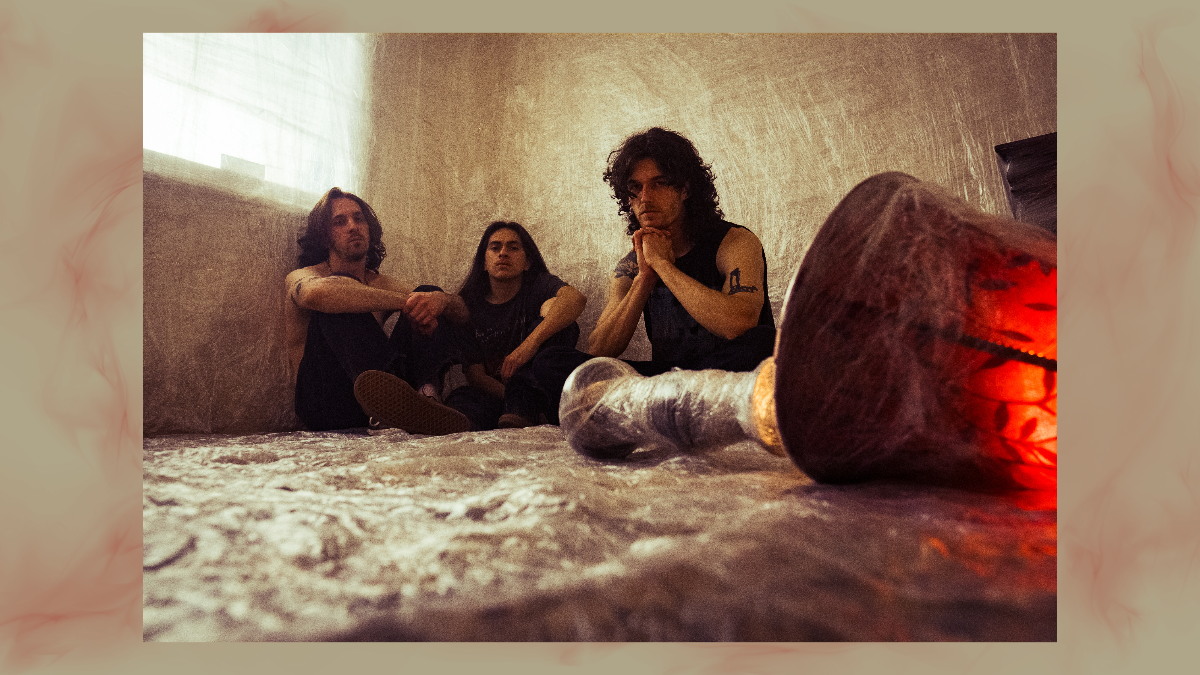
As heavy music’s prominence has risen in the last several years, LA-based alternative rock group Return to Dust are navigating a musical landscape that is much different than the era of 90s and 2000s rock bands that inspired their sound. After releasing a handful of singles and the EP The Black Road earlier this year, Return to Dust are ready to bring aggressive rock n roll to an Internet-obsessed generation.
In the last 30 years, technology has revolutionized how society interacts, shops, and accesses information. At the click of a button, music from any era and genre is readily available. The whole culture of experiencing and discovering music has drastically changed. Whereas physical media like CD and tapes flooded music stores 30 years ago, streaming’s current stronghold on the music listening experience has morphed how listeners consume and interact with music.
The emphasis on discovering bands by hearing them live has dwindled, and the impact from that first listen is completely different. Return to Dust have an impressive understanding of this cultural shift, even though they weren’t even born when so much of the music they love was originally released.
Each member of the band grew up listening to their own assortment of heavy music from rock to metal, but it was their producer Jim Kaufman that introduced them to the 90s and 2000s alternative rock that would be the cornerstone of their inspiration. After meeting Kaufman several years ago, the band quickly did their homework and dived deep into bands like Soundgarden and Alice In Chains.

“It was quite a time for aggressive music,” explains bassist and vocalist Graham Stanush. “Definitely there’s just kind of a peak there for aggressive music and like that attitude that kind of comes with the nu metal scene, the grunge scene, and stuff like that.”
“That is the big difference. In the 90s that was the culture. You’d go to shows and you’d see it. That was like the living thing of it. Whereas now you just show someone the song on Spotify and it doesn’t really hit the same,” says vocalist and rhythm guitarist Matty Joseph. “We’re pretty much pushed to stay in our house and scroll through our phone…it definitely changes what people listen to.”
Attention spans are shorter because of the proliferation of Instagram Reels and TikTok videos. According to recent research from psychologists, our attention spans have actually decreased over time because of social media.“I think with TikTok all the videos are so short and you have the little music clips. I don’t think that people have enough attention span to listen to the whole song,” remarks guitarist Sebastian Gonzalez.
Now that the Internet is the chief curator of which bands are discovered, Return to Dust have been using social media to their advantage. The band didn’t even have social media accounts until about six months ago, but the newly-formed digital presence has already made an impact. This summer, their single “Belly Up” went viral on TikTok and amassed over 2 million views. The role of musicians as content creators has meant that artists often find themselves having to take on new skills just to create these impactful moments online with an established visual identity. Return to Dust have picked up video editing skills to reach audiences that years ago would not have been possible.
“Nowadays I feel like there’s so much weight on artists and bands now where you have to be like videographers essentially to be a band to a high degree,” says Stanush. “If you want to catch the attention of millions you gotta be online.”
Joseph adds that “there’s an untapped audience right there for you, and if you want your music to reach people, you’ve gotta put it on a silver platter and present it to them.”
It’s easy to let viral clips or singles take the lead, but Return to Dust aren’t letting the viral success influence the songwriting process. As they gradually work towards a full-length album after focusing on singles, they’re cognizant of how the songs connect together to form an overall body of work rather than a playlist of singles, which nowadays is quite common. Though the recent singles “Belly Up,” “No Love,” and “When You Look at Me” have brighter sounds, there’s still an intensity in the delivery and themes. The batch of songs they’re working on for the upcoming album aligns more with the darkness of their debut EP The Black Road.
“I’m excited about the new stuff though because we’re gonna be touching a lot of corners that we haven’t yet,” says Stanush. One of the biggest differences between the songwriting process for The Black Road versus now is that the band hadn’t played any live shows while writing the EP, and the songs were simply based off of what they were listening to at the time.
The EP was written during the pandemic not long after Stanush and Joseph had moved to LA from Texas. With no connections within the LA scene and no concerts to attend during quarantine, they relied on their musical tastes to guide them. When the pandemic subsided, however, they made up for lost time and attended shows constantly. Especially Stanush. He attended several shows a week and realized that traversing LA’s overwhelmingly vast music scene took considerable effort.
“LA’s so dense with so many different types of music. You can go to the same place every night of the week and have seven different nights in terms of genre. It’s really difficult to navigate and I think you just kind of have to spend some time doing your research,” Stanush says. The band is still navigating the scene and discovering where they fit in. “I still don’t really know what the state of the music scene is like in LA cause it’s just so vast,” admits Joseph.
Regardless of where they find themselves in LA’s music scene, the band is itching to quit their day jobs and tour extensively around the U.S. Back in August, they had quite the learning experience on stage when they opened for Steel Panther in Las Vegas.
“Yeah, it was super fun for what it was and quite a unique experience,” says Stanush. “It was honestly really funny cause our music’s very heavy and kind of broody and Steel Panther’s like the opposite of that. The imagery was really funny cause we’re like basically dressed in all black, and playing heavy grunge stuff, and then we get off stage and this dude’s in like tights and neon colors, so that was funny.”

It may have been an odd pairing, but the opportunity to performance in a larger venue was a lesson in how to own the stage and interact with different parts of a crowd. As a band hungry to get on the road and spread their music to as many people as possible, it was a valuable experience. Now they’re ready to connect with the crowds and provide that face-to-face experience of discovering live music that is so important to them personally.
“When people listen to our music, I want them to have the same feeling that I get when I listen to a really good song that I can’t explain,” says Gonzalez.
“There’s a lot of hardship and struggle and stuff like that that goes into these tunes, so I hope that people resonate. That’s it,” says Stanush. “I just hope people resonate and they feel it and get something from the experiences that we’ve had. I think that’s kind of all that you can really hope for.”



Leave a Reply