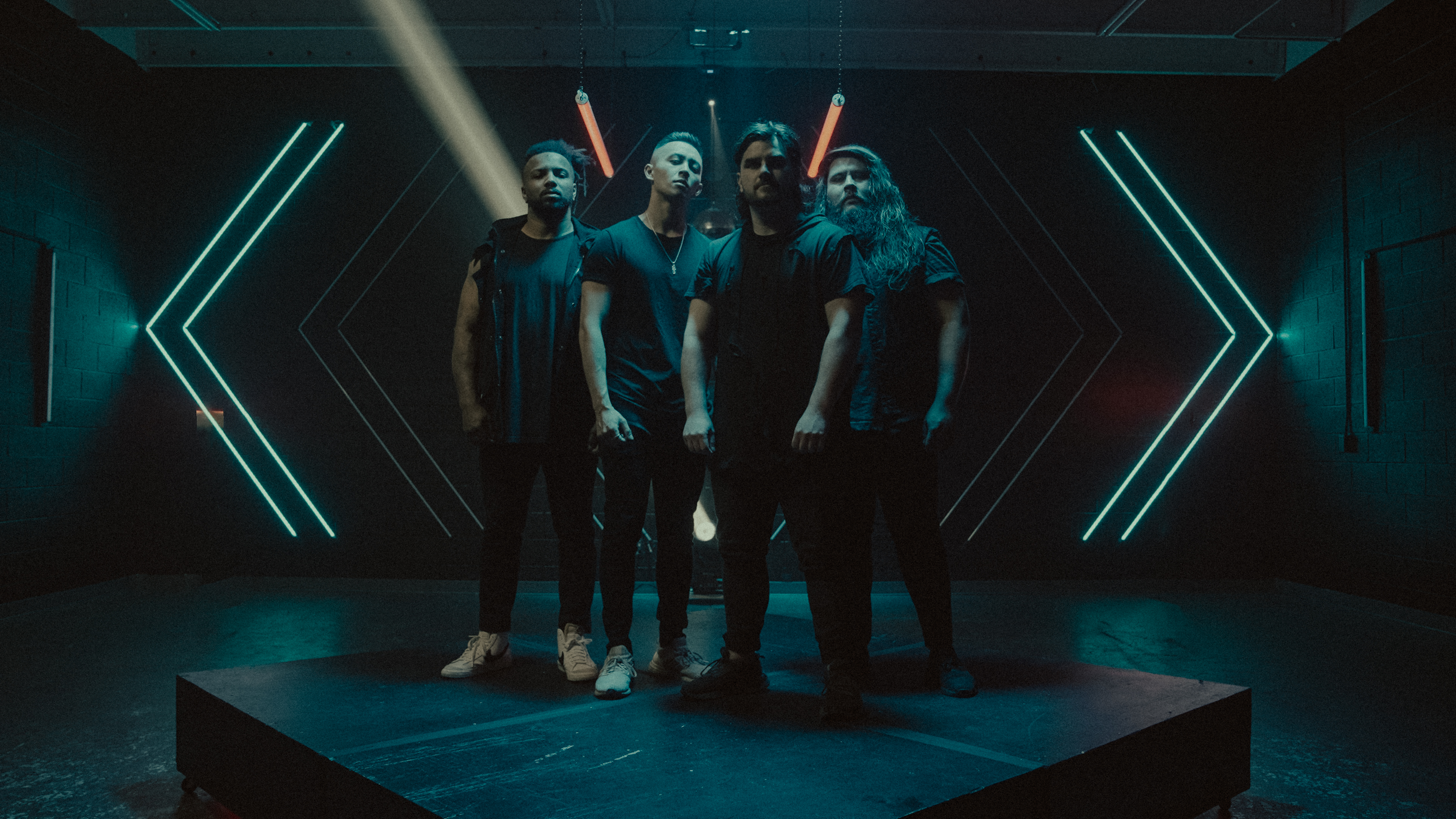
Metalcore quartet Of Virtue has been gradually building up a fanbase with its unique blend of metal, electronic elements, and melody, but the sound isn’t the only reason why listeners have been captivated. From the beginning, Of Virtue’s incredibly honest and emotive lyrical themes have been a crucial component of the band’s framework. Guitarist and co-vocalist Damon Tate has used his personal struggles as a lyrical catalyst- hoping that by sharing his story, he will create a positive impact for others. After more than six months since the group released the tour de force album Omen, Tate discusses the openness of his songwriting and how he hopes it inspires listeners.
In the same way Of Virtue has emotionally connected with so many fans, Tate has connected with distorted guitars, visceral vocals, and punishing drums as much as he has with the message behind it. As a kid in the early 2000s, nu metal was the first type of music that he discovered on his own. Bands like Korn and Slipknot were appealing sonically, but it was Linkin Park that impacted him lyrically. Chester Bennington’s raw and blunt emotions were on full display, and Tate could feel exactly what they were going through- not feeling heard and the lingering nature of depression.
Now 15 years sober, Tate has also been channeling his past frustrations with sobriety and mental health into Of Virtue. On the track “Sober,” the band laments both the internal frustrations of alcoholism and the effect it has on loved ones. Co-vocalist Tyler Ennis sings “not proud of my mistakes. Show me there’s a way that life’s not over if I wake up sober.”
Instead of reliving painful memories when performing songs like “Sober” live, Tate feels a catharsis from releasing the pain of the past. According to him, it’s like a “live therapy” when the crowd sings in unison during a moment of intensity. “It’s just a form of connecting and wanting to be seen- feeling like you’re being heard, feeling like somebody else knows what you’re talking about and can speak to you in a way that maybe others can’t,” Tate explains.
It’s a privilege to be able to tour, but even more so when surrounded by such a supportive and understanding community for more than 20 years. He has continually surrounded himself with people that not only keep him accountable, but have helped him be more comfortable talking about what he’s feeling.
Ultimately what has made him more comfortable is the positive impact he can have on others that are struggling with similar issues. “Having that voice, that type of platform, or the ability to speak in that way has made me more comfortable with it,” Tate says.
The external impact was ominously present when the band was writing Omen during the height of the COVID outbreak. Music took a backseat as the band was reflecting on humanity and what was happening in the world around them. Rather than trying to block out the omnipresent struggles of the virus and numerous protests erupting around the country, the group decided to discuss current events and what was happening in their lives before diving into writing. In this case, the art couldn’t be separated from what was happening externally.

“Art is a reflection of what is going on around you, and all we can do is react…we can’t divorce how we feel from what is going on around us,” explains Tate. Of Virtue accepted the feelings associated with the circumstances of that time and knew that expressing inner thoughts despite the discomfort would be worth it in the end.
“What you hold back might be the most important thing that you need to actually say,” Tate says. “We want the world to be a harmonious place. We want to be people that put positivity, put a light out there.”
There’s a cyclical nature to battles with addiction or mental health, but there’s also a recurring process for how Tate’s positive mindset can continue to affect listeners. In the same ways that music was his lifeline to healing, Of Virtue can now become that cornerstone of productive change for others. He recalls an impactful moment after a show where a fan shared his journey with sobriety and even his AA coin. It’s interactions like this that have motivated Tate to continue to unveil the truth without sugar-coating his experiences.
“It’s just trying to help ourselves, and then we can in turn help others, because you never really know what music can do- what art can do, Tate explains. “I just want to give myself a chance to be as open and honest with myself and then put that into the world, and hopefully… inspire somebody else to do the same thing, and if it inspires them, they can inspire.”



Leave a Reply